
I help small teams build connected products
Hi, I'm Cliff Brake. Product development is changing. Shipping on time is a challenge. I offer practical ways to improve how you build and borrow technology, so development goes faster and faster instead of bogging down in technical debt.
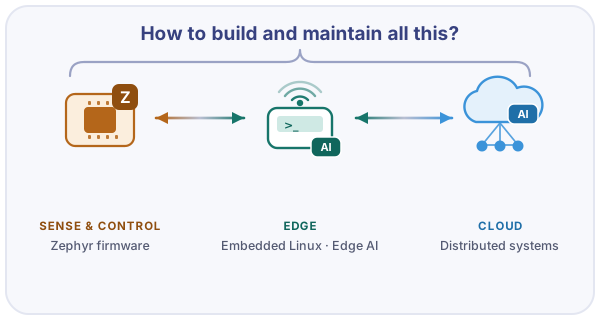
The goals every product team shares
Simple ingredients for a successful product.
- Ship on time
- Efficient reuse of technology
- Quality
- Control
- Leverage AI
- Security
- Adapt to changing needs
- Scale the team and product
Why doesn't it always come together?
Teams have talented people and good technology, yet still struggle to ship on time and meet the goals above. Here are a few patterns I keep seeing on teams that feel stuck.
Using the wrong technology
Small teams have different problems than large teams. Just because Google uses it does not mean it is right for you.
Neglecting the process
Building and maintaining complex systems requires process. The good news is it does not need to be hard or time-consuming. A little goes a long way.
Redoing work others have done
To be efficient, we have to leverage the work others have done, not only the technology but also the process behind it. This includes our own work that we have not automated and keep repeating.
Slow development cycles
Innovation requires fast iterations, which means shrinking the time between having an idea and putting it in front of real users.
Letting AI outrun your process
AI amplifies whatever system it is dropped into. With clear structure, it multiplies a small team. Without one, it produces code faster than anyone can review, understand, or maintain.
Inability to track things
To move fast, we have to efficiently track and identify versions, parts, units, and locations across the whole product.
Three principles that produce speed, agility, and quality
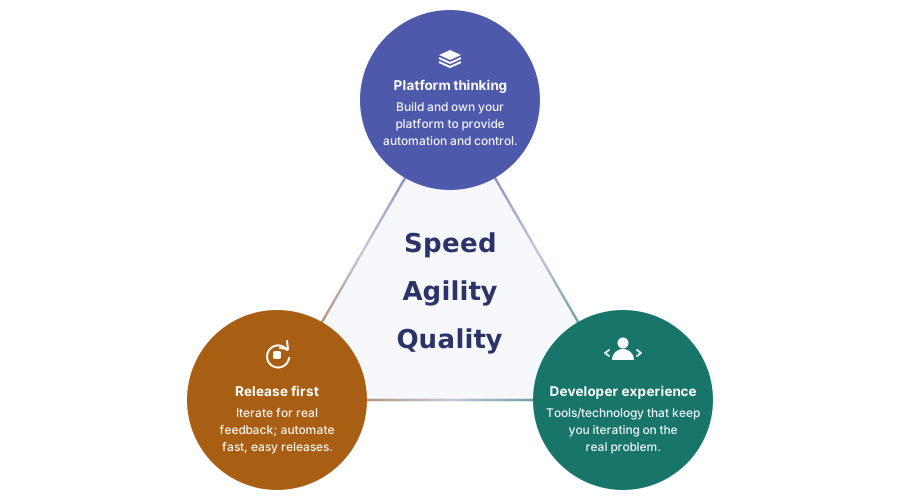
Getting to a good place is not an event or a meeting, but rather a process over time. The thinking used to address problems needs to stand above the thinking that created the problems. It rarely works to just "fix a problem" rather than step back and change the way we are doing things. The following are ways I've found to address all of the above concerns in a way that is simple to implement, measurable, and reliable. Platform thinking decides what you stand on. Release first keeps it moving, surfaces problems, and provides needed feedback. Developer experience sets the pace: how fast you can move. The technology changes. These principles don't, and everything I build reinforces them.
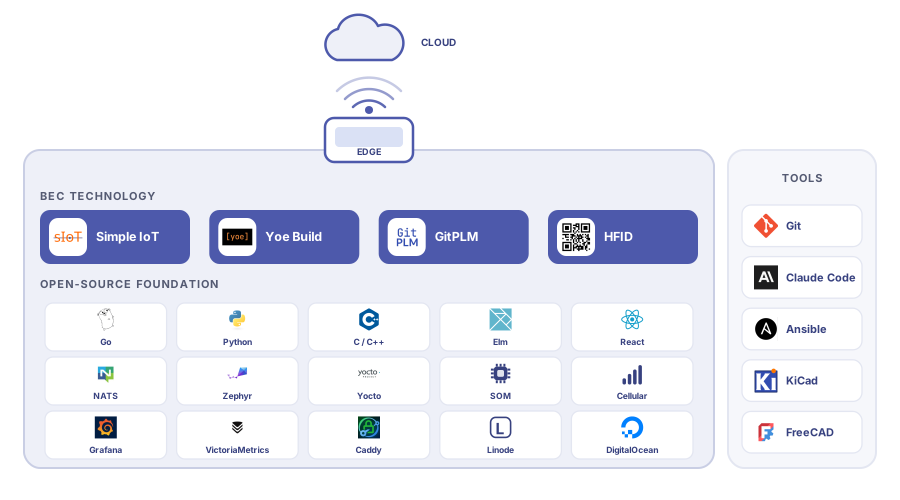
A platform assembled from open source and other technology
A connected product stands on a platform — critical pieces, most of which we did not create but must assemble and use. Below is my own platform: the open-source pieces I build, the foundation they stand on, and the tools that tie it together. The specifics of your platform will differ. What matters is that you define it: what you are using, why you chose it, and how it all fits together.
Free resources
The thinking, writing, discussions, and projects behind everything here.
Interested in shipping faster?
This all seems fairly obvious and basic, but in my experience the simple things are the hardest to get right. Whether it's a product you're trying to get out the door, a build that slows you down, or a foundation you want to get right from the start, there's a way in below. Start a conversation, or book a free 30-minute technology/workflow audit, and I'll follow up with a written report.